Inline Laser Marking System: Laser Marking of Metal and Plastic
REA Laser Technology offers versatile laser marking solutions for a wide variety of industrial marking applications. REA marking lasers provide the best possible combination of precision and efficiency, allowing you, for example, to mark your metal or plastic products easily, reliably, and permanently using a laser. Whether barcodes, serial numbers, or custom layouts—our REA LASERS make it possible. Depending on the material and surface, we’ll find the optimal marking laser for your product marking needs in industrial applications. REA LASER’s portfolio includes fiber lasers, CO2 lasers, UV lasers, and other marking lasers.

Which laser marking system is right for your industrial application?
You have the product; we have the right industrial marking laser. But how does a laser work? A laser generates a focused beam of light that strikes a surface with great precision. This allows materials such as metal and plastic to be marked and labeled fast, permanently, and contact-free. Our product range includes carbon dioxide lasers, also known as CO₂ lasers, as well as fiber lasers. Based on these two laser technologies, we distinguish between the CL and FL product lines. Your product material and the marking speed required for your application determine which type of laser is suitable for your specific use case. Fiber lasers are suitable as marking lasers for metal and industrial applications. CO₂ lasers are the first choice for organic materials such as glass, wood, and paper—for example, in the packaging and FMCG sectors. Additional features: maintenance-free beam source, protection class (IP65) available, fully inline-capable.
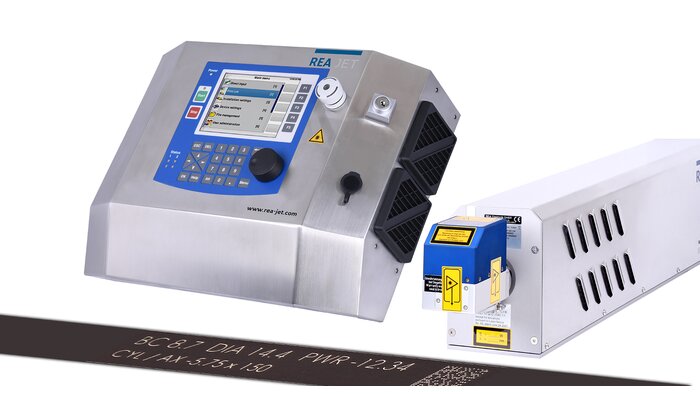


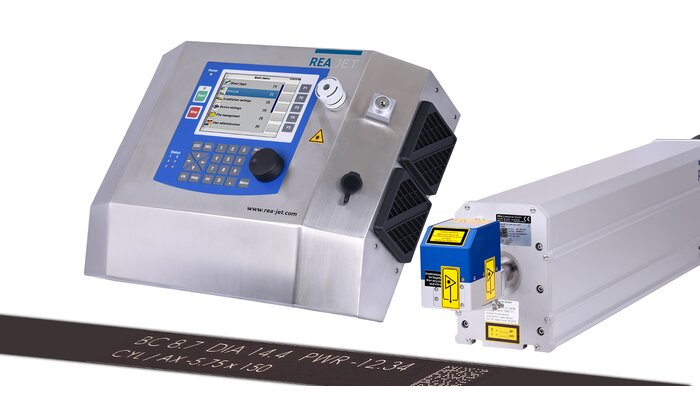


Class 1 Laser Marking Station
Standardized and custom laser cabins offer a safe and efficient solution for industrial laser marking. They are ideally suited for industrial laser marking of a wide variety of components and materials. Whether in an automated environment or for manual assembly, REA laser marking systems enable a reliable and cost-effective marking process.
All laser cabins are designed to meet Laser Class 1 standards and ensure optimal protection as well as convenient and safe operation of your REA marking laser in production and manufacturing. They can also be flexibly adapted to different requirements and work processes.

Reasons to Work with Us
Our laser marking systems stand out for their durability and minimal maintenance requirements. They perform optimally and reliably in harsh industrial environments. Benefit from maximum marking quality, reduced downtime, and increased production throughput. Our REA Laser team will work with you to find the ideal solution—with no obligation and at no cost. Contact us!


REA LASER offers you a wide selection of laser marking solutions...
...for a wide variety of industrial laser marking requirements. REA laser marking systems can be optimally tailored to your materials and surfaces, enabling precise, permanent, and cost-effective laser markings. Discover our application examples for laser marking on materials such as metal, steel, stainless steel, foil, glass, rubber, wood, plastic, paper, and cardboard.
...Are you looking for industry-specific solutions? Here you’ll also find laser marking examples for numerous industries and sectors, including: automotive, building materials, chemicals, electronics, beverages, wood processing, cosmetics, plastics, food, mechanical engineering/OEM, medical technology, and pharmaceuticals.
Do you know which questions we get asked most often? We'll tell you. Do you have any other questions about this? Then get in touch with our REA Laser team!
REA Marking Lasers – The Best Choice for Precise, Efficient, and Durable Laser Markings
WithREA LASER’s marking lasers, you can mark your products permanently, forgery-proof, and in an environmentally friendly way—all without consumables. Whether metal, plastic, glass, or paper: Our fiber and CO₂ lasers deliver razor-sharp results at the highest speed and with maximum reliability.
Fiber lasers (REA LASER FL) are particularly well-suited for metals and industrial applications, while CO₂ lasers (REA LASER CL) enable ideal marking on organic materials such as wood, paper, or glass. Both variants offer impressive durability, minimal maintenance, and easy integration into existing production lines. In addition, REA also offers UV lasers. These are primarily used for laser marking of challenging plastics.
Benefit from precise marking, reduced downtime, and sustainable technology—for maximum productivity and cost-effectiveness. Laser expertise and industrial quality—“Made in Germany”
Request a free consultation and complimentary initial sample now, and discover the right REA marking laser for your application!
