ISO/IEC 15416: Quality Inspection of 1D Barcodes
ISO/IEC 15416 is the international standard for measuring and evaluating the print quality of linear barcodes (1D Codes or barcodes). It defines a standardized test procedure used to evaluate, among other things, symbol contrast, modulation, defects, and decodability. The goal is to provide an objective and reproducible assessment of code quality.
The current edition is ISO/IEC 15416:2025.
What is ISO/IEC 15416?
ISO/IEC 15416:2025 describes a method for evaluating the print quality of linear barcodes. To do this, defined characteristics of the code are measured and evaluated. An overall assessment of the symbol quality can be derived from the individual measurement results.
This standardized test procedure helps detect quality deviations and identify possible causes of inadequate results.
The standard is used wherever the quality of linear barcodes has to be assessed objectively and reproducibly—for example, in manufacturing, logistics, retail, and quality assurance.
To which barcodes does ISO/IEC 15416 apply?
The ISO/IEC 15416 standard applies to all 1D Codes. These include, for example, common 1D Barcodes such as:
- Code 128
- GS1-128
- EAN-13
- EAN-8
- UPC
- Code 39
- Interleaved 2 of 5
Different verification procedures apply to two-dimensional codes such as Data Matrix code or QR code. For example, the print quality of printed 2D-Matrixcodes is evaluated according to ISO/IEC 15415.
How is barcode quality evaluated according to ISO/IEC 15416?
During inspection in accordance with ISO/IEC 15416, the relevant quality parameters of a 1D barcode are measured and evaluated. An overall assessment of the symbol quality is then derived from the individual measurement results.
This produces an objective and reproducible assessment of a barcode’s quality. Users can thus not only determine whether a specified quality target has been met, but also analyze which characteristics limit a code’s quality.
Procedure and Evaluation Criteria
ISO/IEC 15416 specifies a defined procedure for inspection of the print quality of linear barcodes. To this end, the barcode is verified at ten different locations. The scan lines are distributed as evenly as possible across the height of the barcode.
Each of these ten measurements generates what is known as a scan reflection profile. This profile is evaluated based on the quality parameters specified in the standard. The lowest parameter grade determines the rating of the individual scan reflection profile.
A quality grade is then determined for each scan reflection profile. The rating ranges from 4.0 for the best quality to 0.0 for the worst quality. For historical reasons, these numerical quality grades may also be assigned letter grades ranging from A to F.
An average is then calculated from the results of the ten scan reflection profiles. This average forms the basis for the overall symbol grade according to ISO/IEC 15416 and thus for the summary evaluation of barcode quality.
Multiple Measurements and Quality Levels
The print quality of a barcode is numerically evaluated according to ISO/IEC 15416. In the overall evaluation determined from multiple measurements, the quality grade can be reported in 1/10 increments:
| Quality Level Based on Multiple Measurements | ISO/IEC Class | ANSI Class | Meaning | ||||
|---|---|---|---|---|---|---|---|
| Quality Level Based on Multiple Measurements | 3.5 to 4.0 | ISO/IEC Class | 4 | ANSI Class | A | Meaning | Very good |
| Quality Level Based on Multiple Measurements | 2.5 to 3.4 | ISO/IEC Class | 3 | ANSI Class | B | Meaning | Good |
| Quality Level Based on Multiple Measurements | 1.5 to 2.4 | ISO/IEC Class | 2 | ANSI Class | C | Meaning | Satisfactory |
| Quality Level Based on Multiple Measurements | 0.5 to 1.4 | ISO/IEC Class | 1 | ANSI Class | D | Meaning | Sufficient |
| Quality Level Based on Multiple Measurements | 0.0 to 0.4 | ISO/IEC Class | 0 | ANSI Class | F | Meaning | Failed |
However, the required minimum quality depends on the specific application and the applicable specifications. A good rating according to ISO/IEC 15416 therefore does not automatically mean that all requirements for a specific application are met. In addition , industry, user, or symbology specifications may stipulate certain minimum quality standards or additional requirements for the barcode.
Which quality parameters are evaluated for 1D Barcodes?
During a standards-compliant barcode inspection, various characteristics of the scan reflection profile are examined. These provide insight into whether the barcode can be reliably captured and decoded and, if applicable, which characteristics may limit its quality.
-
Decoding
During decoding, the system verifies whether the barcode can be decoded according to its symbology using the reference decoding algorithm specified by the standard. This initially determines whether a valid barcode symbol can be identified from the measured scan reflection profile.
-
Minimum Edge Contrast
Minimum edge contrast measures the difference in reflectance at the transitions between a dark bar and the adjacent light space. Sufficiently distinct transitions are an important prerequisite for the reliable detection of individual bar and space elements.
-
Minimum Reflectance
Minimum reflection prints the lowest measured reflection value within the scan profile. It is particularly relevant for evaluating the dark bars and helps determine whether they are rendered dark enough.
-
Symbol Contrast
Symbol contrast prints the difference between the lightest and darkest reflection values within the barcode—including the quiet zone. Sufficient contrast between bars and spaces is essential for reliable recognition by a reading system.
-
Modulation
Modulation relates the local contrast ratios at individual edges to the overall symbol contrast. This reveals whether individual bar-space transitions are significantly less pronounced than the overall available contrast.
-
Defects
Defects are local irregularities in the barcode’s reflectance profile. These include, for example, unwanted light spots within dark bars or dark spots within light spaces. The severity of these local reflectance deviations is evaluated in relation to the symbol contrast. Larger defects can impair the reliable reading of the barcode.
-
Decodability
Decodability describes how well the measured dimensions of the bars and spaces correspond to the ideal dimensions specified for the respective symbology. This allows for an assessment of how large the remaining tolerances are relative to the threshold values relevant for decoding.
-
Quiet Zones
The blank areas before and after the barcode are referred to as quiet zones. They separate the barcode symbol from adjacent print elements and are important for reliable recognition.
The inspection verifies whether the required quiet zones are present and whether they meet the dimensions specified for the respective symbology or application.
What Determines Overall Quality?
The individual parameters are not simply averaged. For each scan reflection profile, the relevant parameter with the lowest rating is the determining factor. A barcode with very good symbol contrast, for example, may still receive a lower scan reflection profile rating if defects, modulation, or decodability are rated lower.
Only then are the results of the scan reflection profiles distributed across the barcode height combined to produce the symbol’s overall rating. As a result, the inspection not only shows the overall quality achieved but also identifies which parameter limits the barcode’s quality.
Why is inspection according to ISO/IEC 15416 important?
A barcode can be read by a single scanner and still lack quality reserves. Successful reading alone therefore does not provide an objective assessment of a barcode’s quality.
This is precisely where the difference lies between simply reading a code and conducting an inspection in accordance with the standard.
An inspection in accordance with ISO/IEC 15416 enables a standardized evaluation of barcode quality under defined measurement conditions. This allows companies to identify quality deviations early on, optimize printing processes, and support the reliable capture of barcodes throughout production and logistics processes.
This is particularly relevant for:
- Incoming and outgoing goods inspections
- Printing process controls
- Packaging and labeling processes
- Production and assembly lines
- quality assurance
- Retail and Logistics
- Traceability Applications
Scanning a barcode or verifying a barcode: What’s the difference?
A barcode scanner primarily answers the question:
- Can this scanner read the barcode?
A barcode verification device that complies with standards, on the other hand, answers the more in-depth question: - What is the objectively measurable quality of the barcode under defined test conditions?
For reliable quality control, it is therefore not sufficient to simply read a barcode with a standard scanner.
Code verification systems measure defined quality parameters and document the results in accordance with applicable standards and specifications. This allows measurement results to be reproduced, compared, and used to optimize labeling processes.
How can 1D Barcodes be verified according to ISO/IEC 15416?
Especially barcode verifiers or code verification systems are used to perform quality assessments in accordance with standards.
REA VERIFIER code verification systems enable the objective and reproducible evaluation of 1D Barcodes in accordance with ISO/IEC 15416. Depending on the application, various verification systems are available—ranging from mobile systems for incoming goods and quality assurance to solutions for production and printing processes.
Factors such as the code type, code size, surface, application, and required measurement conditions play a role in selecting the appropriate verification system.
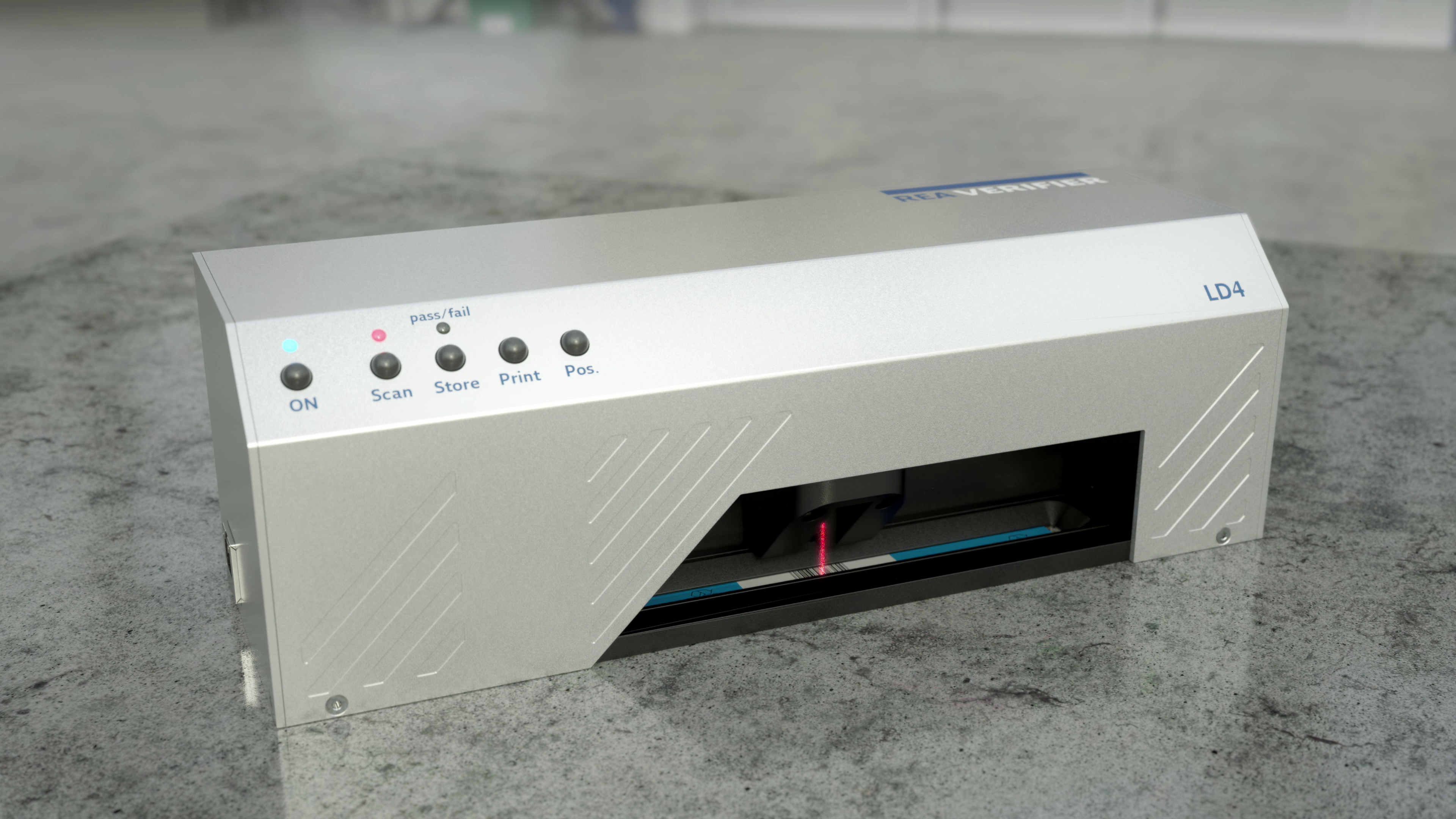
The REA PC Scan/LD4 stands out with comprehensive functions for the precise measurement and analysis of barcodes, based on the ISO/IEC 15416 standards.

REA Check ER offers comprehensive features for analyzing codes in accordance with the specifications of ISO/IEC 15416.
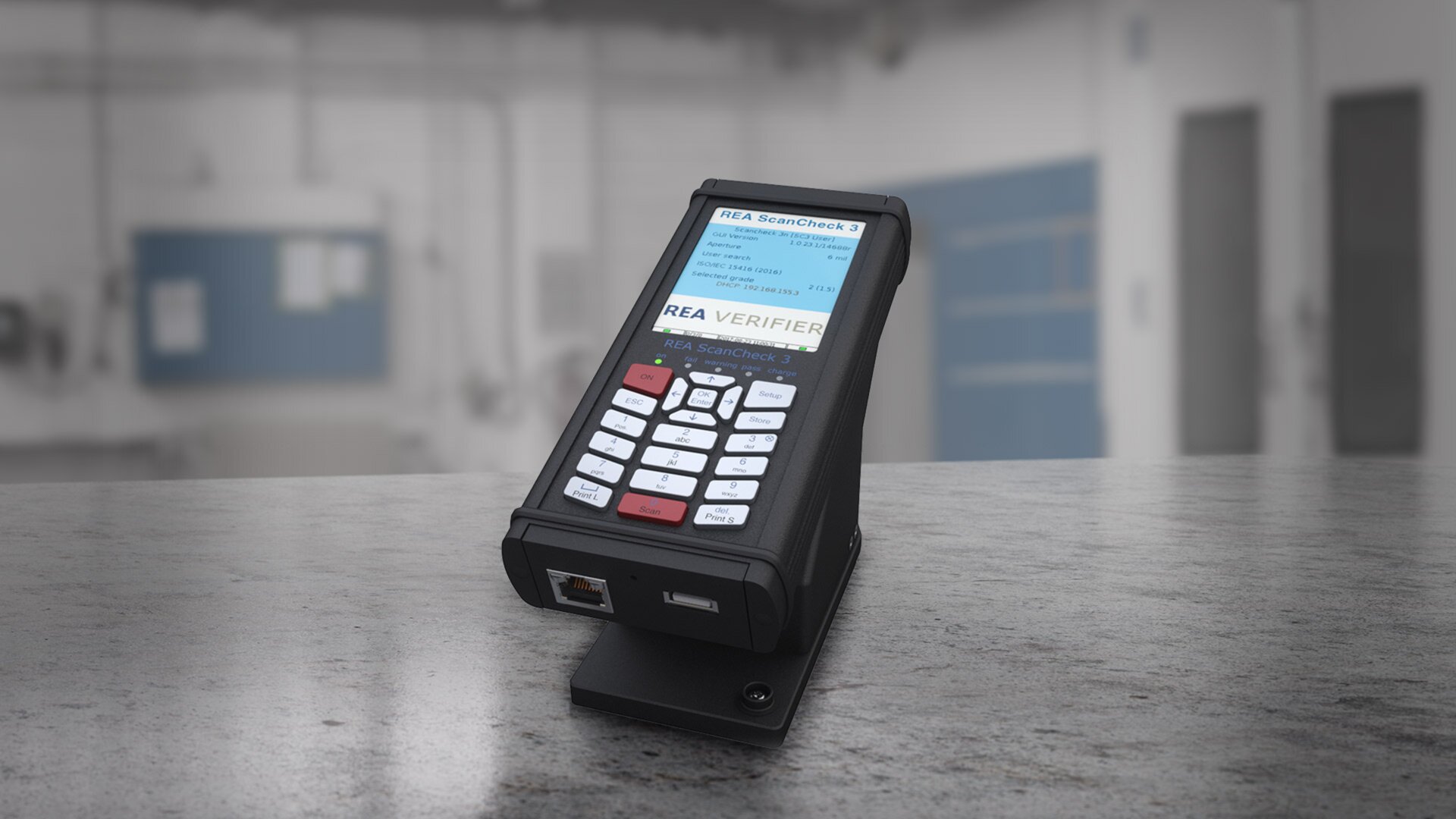
The REA ScanCheck 3 is a versatile, battery-powered, high-performance barcode verification system based on the ISO/IEC 15416 standards.

The REA VeriCube is a highly advanced and modernmatrix and barcode verification system that can be used flexibly and in a variety of ways across industries.

The REA VeriMax is a verification system especially designed for seamless integration into production lines that verifiesboth 1D Barcodes and 2D-Matrixcodes.
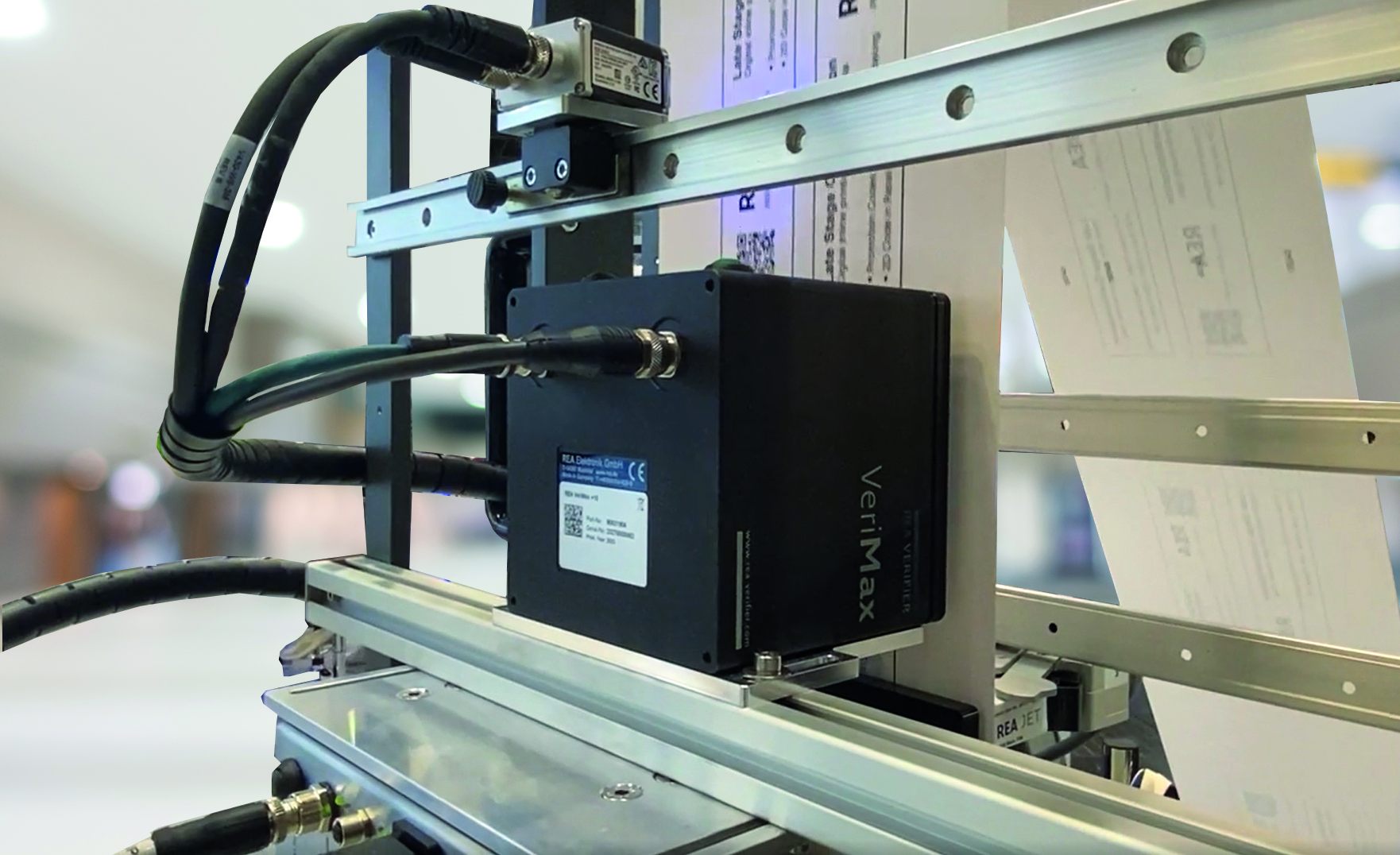

The REA VeriMax Mobile is a portable, offline code verification device for 1D Codes and 2D Codes. With its compact size and the ability to mount a tablet PC directly onto the device, it can be used anywhere.
ISO/IEC 15416 and ISO/IEC 15415: What's the Difference?
The two standards cover different types of optical codes:
- ISO/IEC 15416:2025
Evaluation of the quality of linear barcodes, or 1D Codes. - ISO/IEC 15415:2024
Evaluation of the print quality of two-dimensional matrix codes, such as Data Matrix code or QR code.
Which testing standard to apply therefore depends, among other things, on the code symbology used.
Frequently Asked Questions About ISO/IEC 15416
-
ISO/IEC 15416 is an international standard for the metrological evaluation of the quality of linear barcodes. It defines procedures for measuring and evaluating various quality characteristics and, based on these, enables an overall assessment of symbol quality.